


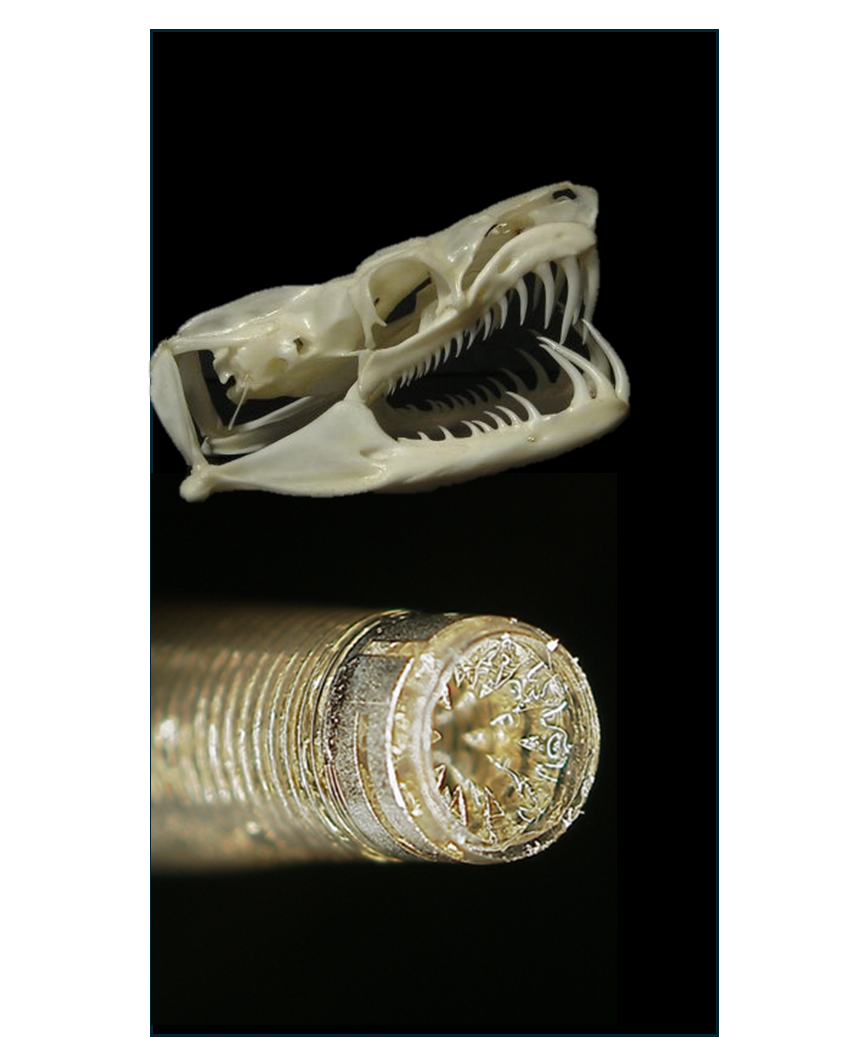
The Emboa Medical Inc. Thrombus Retrieval Aspiration Platform (TRAP) catheter represents a novel biomimetic approach to acute ischemic stroke thrombectomy, drawing inspiration from the efficient predatory mechanism of boa constrictors. This device aims to overcome limitations of existing technologies by integrating both aspiration and a unique gripping force for more effective and safer clot retrieval.
The Problem / History
Acute ischemic stroke, predominantly caused by a blood clot obstructing cerebral blood flow, remains the second leading cause of death globally, with significant morbidity burden. Current mechanical thrombectomy techniques largely rely on either stent retrievers or aspiration catheters. Stent retrievers, while effective, are associated with higher rates of perforation and intracranial hemorrhages due to the interaction of metal struts with vessel walls. Aspiration catheters, which apply suction to remove clots, are generally safer with reported lower rates of distal emboli (3.4% vs. 13.2%) and vessel injury (1.8% vs. 9.3%) compared to stent retrievers, and often achieve faster reperfusion times at lower costs. However, the efficacy of aspiration catheters can diminish at smaller vessel scales, leading to lower removal rates and increased complications, particularly in medium vessel occlusions which account for approximately 45% of ischemic stroke cases. This clinical gap necessitates a device capable of precise, high-force clot removal across a range of vessel sizes without compromising vascular integrity.
The Hypothesis
The central hypothesis guiding this research is that a microstructured catheter, biomimetically designed to emulate the teeth arrangement of a boa constrictor, can enhance blood clot removal forces and improve first-pass success rates in thrombectomy. This design posits that by integrating a “gripping force” with conventional aspiration, the device can effectively engage and remove clots without tearing them, thereby minimizing fragmentation and subsequent distal embolization, and ultimately improving patient outcomes.
Methodology
Emboa Medical developed the TRAP (Thrombus Retrieval Aspiration Platform), a patent-pending, novel microstructured catheter. The design incorporates biomimetic clot-trapping structures on the inner diameter of the distal tip, mirroring the teeth arrangement of a boa constrictor. This allows the catheter to apply both suction force and a mechanical gripping force.
In vitro experiments have been conducted to quantitatively assess the advantages of TRAP catheters compared to traditional catheters. These evaluations included measuring blockage removal force and first-attempt success rates. Critically, testing involved a “worst-case neurovascular model” utilizing real human blood clots to simulate physiologically relevant conditions. Comparison groups included traditional catheters (conventional smooth inner diameter catheters) and conventional aspiration catheters.
Future methodology includes an in vivo porcine model study scheduled for preliminary validation of TRAP’s safety and effectiveness by the end of Q1 2025.
Key Results
The in vitro and neurovascular model testing of the TRAP catheter yielded several promising quantitative outcomes:
Blockage Removal Force: The TRAP design demonstrated a greater than 200% increase in blockage removal force compared to a traditional catheter. In direct comparison, it achieved almost three times the increased force compared to a conventional smooth inner diameter catheter.
First-Attempt Success Rate: In a worst-case neurovascular model, the TRAP catheter achieved a 40% first-attempt success rate, significantly higher than the 10% achieved by conventional smooth inner diameter catheters.
Clot Removal with Human Clots: When tested with real human blood clots in a patient-specific neurovascular model, the TRAP catheter successfully removed 100% of the blood clots in the first attempt, whereas the control catheter achieved a 70% success rate.
Safety Profile: Compared to traditional stent retrievers, aspiration catheters generally show lower rates of distal emboli (3.4% vs. 13.2%) and vessel injury (1.8% vs. 9.3%). The TRAP catheter aims to maintain or improve upon this safety profile while offering superior clot removal force.
“So What?”
The Emboa Medical TRAP catheter, inspired by snake teeth, holds significant promise for “Building a Better World with Biology” by dramatically improving outcomes for stroke patients. By enhancing clot removal efficacy and precision, this device has the potential to:
Reduce Stroke Damage: Higher first-pass success rates and increased removal force mean faster reperfusion of ischemic brain tissue, directly correlating to reduced neurological deficits and improved functional recovery for patients.
Minimize Complications: The biomimetic gripping mechanism aims to remove clots intact, thereby reducing fragmentation and distal embolization, a common complication with existing devices. By maintaining the safety profile of aspiration catheters and avoiding the vessel injury associated with stent retrievers, it contributes to a safer thrombectomy procedure.
Address Unmet Needs in Smaller Vessels: The improved force and gripping capability are particularly relevant for medium vessel occlusions, where current aspiration catheters struggle, potentially expanding the treatable patient population and improving outcomes in these challenging cases.
Economic Impact: Faster and more complete clot removal could lead to shorter hospital stays, reduced rehabilitation needs, and lower overall healthcare costs associated with stroke management.
Platform for Future Innovation: The underlying biomimetic microstructure technology could be adapted for other vascular occlusions beyond neurovascular applications, offering a versatile platform for medical device innovation.
Limitations & Next Steps
While the in vitro data and preliminary models are highly encouraging, several limitations and next steps are critical for the advancement of the TRAP catheter:
In Vitro vs. In Vivo Translation: The reported quantitative results are primarily derived from in vitro experiments and a worst-case neurovascular model. The complex physiological environment of living organisms, including vessel tortuosity, blood flow dynamics, and clot heterogeneity, may present unforeseen challenges.
Detailed Clinical Data: Specific data points such as p-values and detailed sample sizes (n=) from rigorous comparative clinical trials are not yet available in the public domain, as the device is still in early developmental stages. This information will be crucial for a comprehensive scientific evaluation.
Regulatory Pathway and Commercialization: The company is actively working on finalizing the design and establishing differentiation. The transition from successful animal studies to human clinical trials requires extensive regulatory approvals, which are complex and time-consuming.
Molecular Mechanisms: While the biomimetic design is described, specific molecular interactions between the catheter’s microstructures and the clot, beyond macroscopic gripping, are not detailed in the available information.
Next Steps: Emboa Medical plans to conduct an in vivo porcine model study to validate the safety and effectiveness of the TRAP catheter in a living system. Successful completion of this animal study will pave the way for larger-scale verification activities and eventually human clinical trials. The company is also actively seeking guidance from experts in regulatory and commercialization aspects of interventional radiology.


